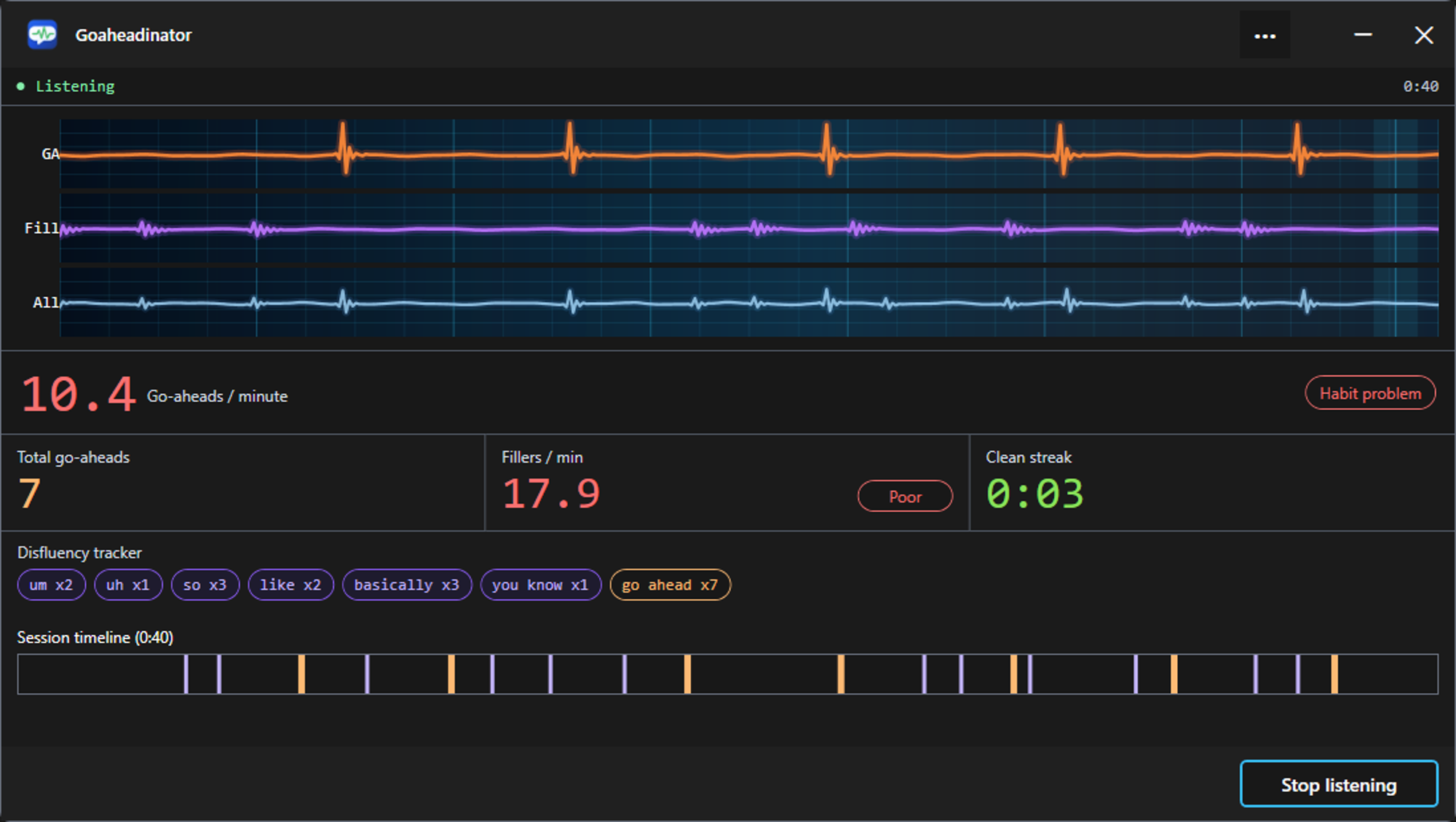
Disfluency analysis

Goaheadinator

/goh-uh-hed-in-ay-ter/ noun.

A Windows coaching tool for spotting fillers, repeated habit phrases, and the dreaded "go ahead" before they turn your demo into verbal bubble wrap.

Disfluencies are the pauses, repeats, filler sounds, and bridge phrases people use while planning what to say next. They are normal in spontaneous speech, and an occasional "um" or "well" can even help listeners follow that thinking. The problem starts when the same phrases become repetitive, patterned, or dense enough that the audience notices the verbal scaffolding more than the message.

Goaheadinator treats "go ahead" as a habit phrase rather than a normal filler. "I am going to go ahead and click Save" usually means "I will click Save," and a shorter sentence gives your audience one less thing to decode.

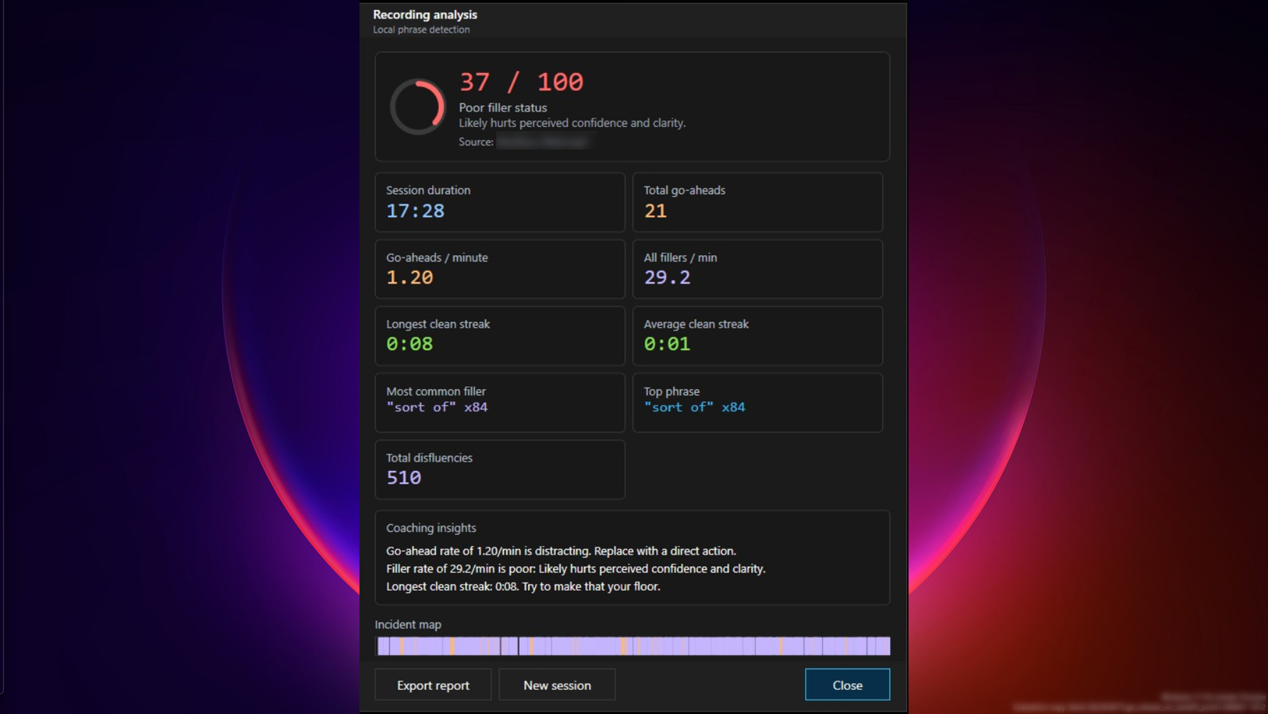
Goaheadinator recording analysis showing filler count, go-ahead rate, clean streaks, top phrases, coaching insights, and an incident map

Why it matters

The goal is clarity, not robotic perfection.

Know when normal becomes distracting

A 2024 study tested public speeches with different disfluency rates and found that five disfluencies per minute did not hurt perceived effectiveness, while high rates around twelve per minute did. Toastmasters also notes that spontaneous speech is naturally disfluent, especially when a topic is difficult or the speaker is nervous.

That makes the useful coaching target practical: reduce repetitive fillers and habit phrases without trying to erase every human pause.

Sources: Journal of Applied Behavior Analysis study on disfluencies and Toastmasters on the science of disfluencies.
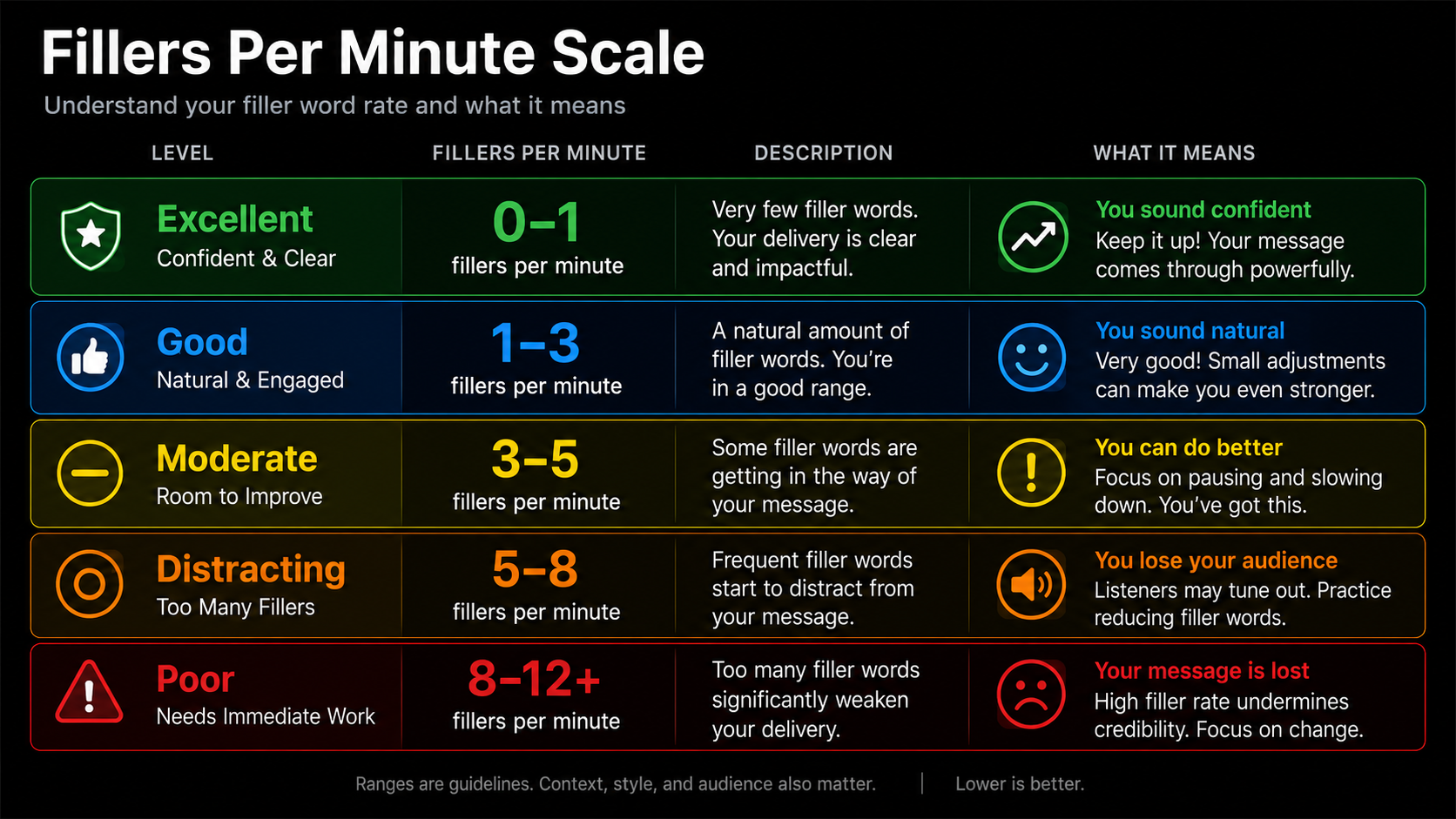
Suggested filler word thresholds

Track habit phrases separately

"Um" is part of ordinary speech. Repeating "go ahead" dozens of times in a demo is a coaching opportunity. Goaheadinator separates overall fillers from habit phrases so a normal planning pause does not hide the phrase that is quietly eating your presentation.

For a 30-minute technical presentation, aim for fewer than five total "go ahead" phrases. Better yet, replace "I am going to go ahead and click Save" with "I will click Save" or "Next, I will save the record."

Good
0-0.25 go-aheads per minute
Moderate
0.25-0.75 go-aheads per minute
Distracting
0.75-1.5 go-aheads per minute
Habit problem
1.5+ go-aheads per minute

Keep pace in the comfortable zone

Pace changes how much room you have to think. Presentation speech is often comfortable around 100-150 words per minute, while analyzed TED talks averaged 173 words per minute. When you race, fillers often become the bridge between thought fragments; when you pause deliberately, silence can do the same job more cleanly.

Source: VirtualSpeech on average speaking rate and words per minute.

Total filler count
See the size of the pattern.
Fillers per minute
Normalize short talks and long recordings.
Top phrases
Find the habits worth replacing first.
Clean streaks
Practice longer runs of deliberate silence.
Timeline markers
Jump back to the moments that need coaching.

Features

Coach the words your audience should not have to hear.

Monitor live while you present

Keep an on-screen counter for "go ahead" and other tracked phrases during practice runs, demos, and recordings. The immediate feedback makes the pattern visible while you still remember what you were trying to say.

Classic fillers
Um, uh, ah, er, and hmm.
Thinking bridges
So, well, okay, right, now, and anyway.
Demo habits
Go ahead, real quick, I will just, and similar phrases.

Analyze recordings afterward

Review a session report with total disfluencies, all fillers per minute, "go ahead" rate, longest clean streak, most common filler, top phrase, coaching insights, and an incident map across the recording.

Goaheadinator recording analysis report with metrics, coaching insights, and an incident map

Turn fillers into better sentences

The best replacement is usually silence. When a phrase is doing nothing for the listener, Goaheadinator gives you a concrete coaching cue: pause, shorten the sentence, then say the action directly.

Instead of
I am going to go ahead and click Save.
Say
I will click Save.
Or
Next, I will save the record.

Start coaching

Go ahead and -- like -- uh... download.

Use the installer for automatic updates, or download the portable ZIP for a self-contained copy.